How to Detect If a TikTok Video Is AI-Generated: A Step-by-Step Guide
The safest way to review a suspicious TikTok is to preserve the cleanest version, separate frame clues from motion clues, and verify the source chain before you trust the clip.
- 01
Start from the cleanest TikTok link or closest-to-original version you can get.
- 02
Check paused-frame detail and sequence-level motion separately.
- 03
Treat stitches, filters, captions, and repost quality as evidence limits, not instant proof.
- 04
Use the TikTok checker as a first-pass review layer, then validate the source chain.
TikTok clips spread fast, and that speed changes the review problem. By the time a suspicious video reaches you, it may already be a repost, a screen recording, a stitched copy, or a heavily edited version wrapped in captions, effects, and music.
That means the job is not only spotting weird frames. The job is separating what the file still supports from what the platform, edit path, and repost chain may have already damaged.
Step 1: Preserve the cleanest TikTok you can review
The first question is whether you are looking at the original TikTok or a degraded copy that already lost useful evidence.
Start with the public TikTok URL if possible. A platform link usually preserves more context than a stitched repost, downloaded screen recording, or messaging-app copy.
- 01Save the TikTok link and visible context
Record the account name, visible caption, sound, and exact link before the post changes or disappears.
- 02Prefer the closest-to-original version
If several copies are circulating, use the least degraded one before you start making claims from artifacts.
- 03Log obvious edits up front
Stitches, duets, captions, beauty filters, speed ramps, and music overlays all change what the detector can confidently infer.
Step 2: Inspect the frame-level inconsistencies
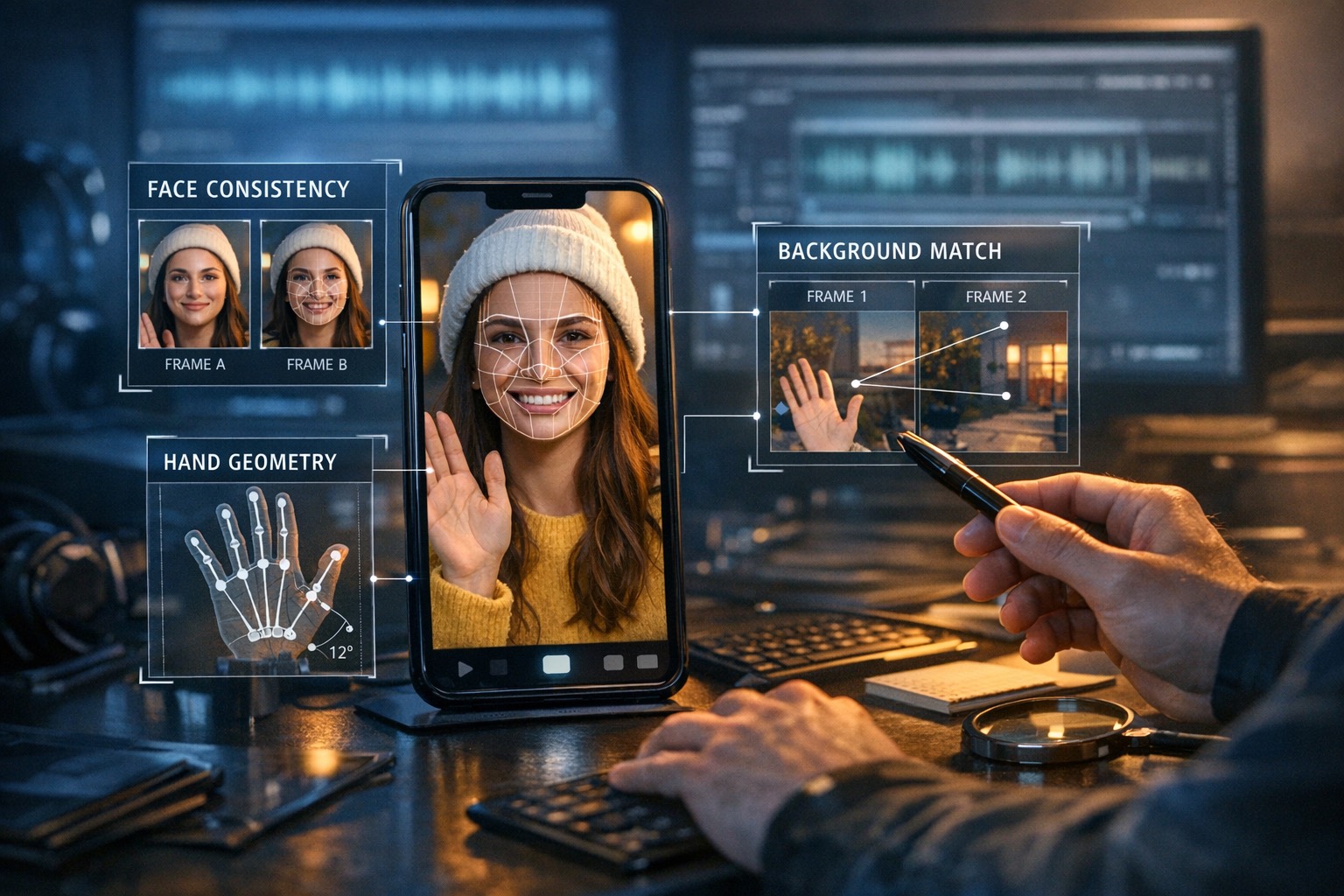
Paused-frame clues are most useful when several of them cluster together instead of acting like one magic tell.
In suspicious TikToks, the most useful visual clues often live in the small details: fingers, teeth, hair edges, jewelry, clothing texture, and the boundary between the creator and the background.
- Hand and finger geometry: Watch for fingers that subtly merge, stretch, or change thickness as the gesture changes.
- Face-detail stability: Teeth, eyelashes, lip edges, and nostrils should not sharpen and soften in inconsistent ways from nearby moments.
- Background continuity: Room details, posters, plants, or furniture should not drift identity if the camera movement does not justify it.
- Lighting agreement: Highlights and shadows across the face, hands, and room should still behave like one scene instead of conflicting local light sources.
Step 3: Review the motion and sync over time
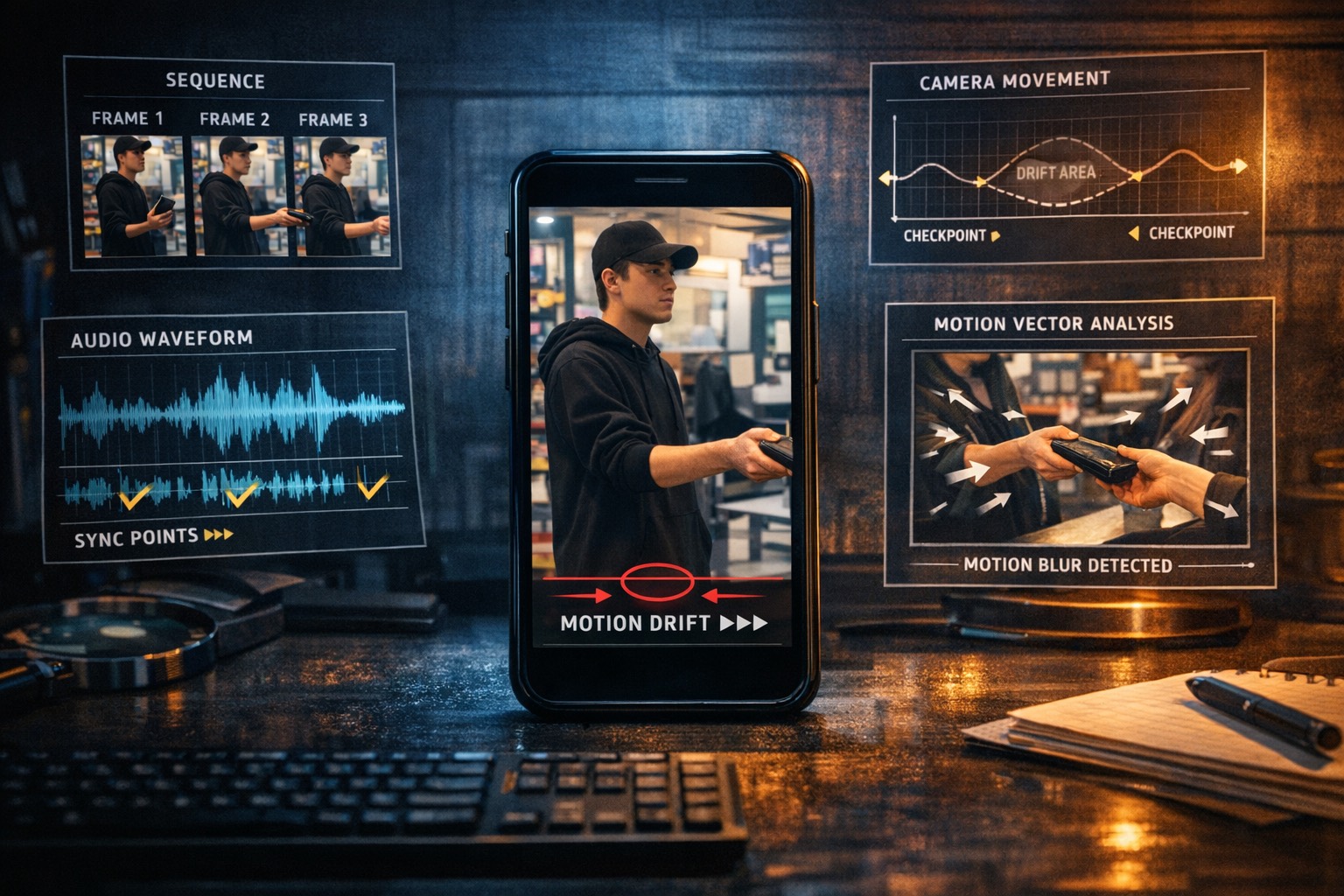
A still frame can look ordinary while the sequence behaves unnaturally, which is why motion review matters so much in TikTok clips.
Replay the video and watch how the face, mouth, shoulders, and hands behave from one nearby frame to the next. Repeated instability is more useful than one awkward still.
- Micro-flicker under motion: Facial detail and object edges can pulse as the speaker turns, dances, or gestures.
- Shape drift: Jawlines, cheeks, shoulders, and hand shapes should not wobble more than the movement itself explains.
- Visible sync mismatch: If live speech is visible, mouth shapes should broadly agree with the cadence and sound you actually hear.
- Repeated instability: One odd frame may be compression. Repeated structural drift across several moments is much stronger evidence.
Step 4: Verify the source chain before you trust the clip
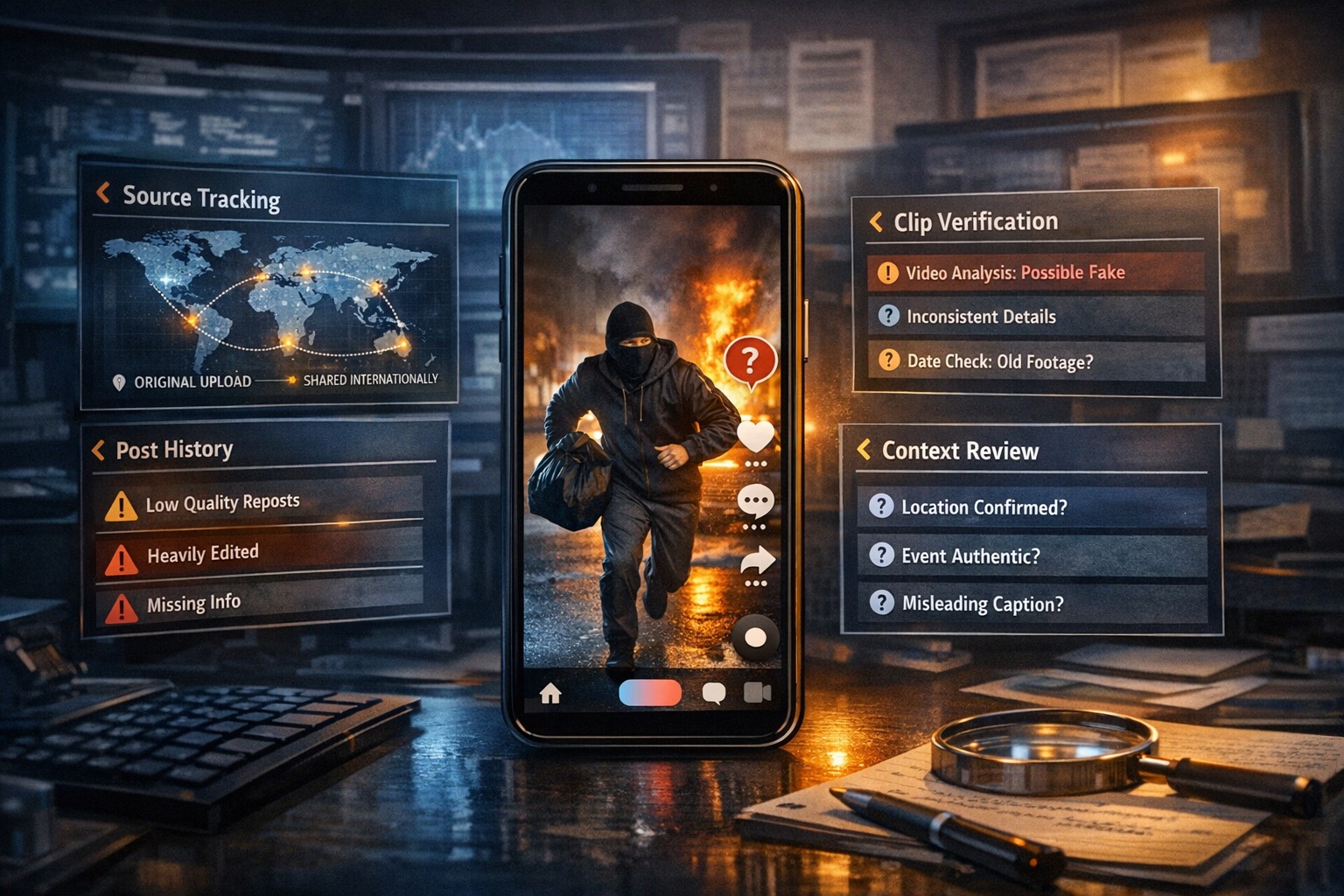
Even a strong detector signal does not replace the question of where the TikTok came from and whether the repost path still makes sense.
Source context is where many TikTok reviews either get stronger or fall apart. If the clip came from an anonymous repost account, a clipped download, or a screen-recorded re-upload with no clear origin, your conclusion should stay more cautious.
- 01Check the posting account
Look at account history, posting pattern, and whether the clip fits the creator’s normal style and audience.
- 02Compare circulating copies
If several versions exist, see whether the suspicious behavior appears in all of them or only in a degraded repost.
- 03Record what provenance is missing
If you cannot connect the TikTok back to a trustworthy source or acquisition path, say that directly instead of implying hidden certainty.
When TikTok detection gets harder
Fast-moving TikTok clips often arrive with exactly the kinds of evidence damage that lower certainty: reposts, edits, overlays, and weak source history.
- Platform-native edits: Stitches, duets, filters, captions, and beauty effects can change how the evidence looks without proving synthetic origin.
- Screen recordings and reposts: Refresh artifacts, blur, and second-generation noise can make real clips look unstable.
- Very short duration: Extremely short TikToks leave less time for temporal review and reduce how much cross-checking the file supports.
- Weak provenance: If the clip is far removed from its source, the honest output should stay proportionate to that missing context.
Sources and standards
Use the TikTok checker as your first-pass review layer
DetectVideo’s dedicated TikTok page is built for the exact job this article describes: paste the TikTok link, run a multi-signal check, and use the result to decide what to trust, what to escalate, and what still needs human review.
Related articles
The safest way to review a suspicious YouTube Short is to preserve the cleanest version, separate frame clues from motion and speech-sync clues, and confirm the source story before you trust the clip.
The safest way to review a suspicious Instagram Reel is to slow down, preserve the cleanest version, inspect the frame and motion clues separately, and check the source story before you trust the clip.
Detection is hard because the clips people care about most are often short, degraded, reposted, or missing evidence modules entirely.
About this article
Written by DetectVideo Editorial Team.
Technical review by DetectVideo Methodology Review.
Last updated April 18, 2026. Related articles are included for readers who want adjacent context, terminology, and workflow guidance.