What Are Content Credentials and C2PA for Video? A Plain-English Guide
Content credentials are provenance metadata, not magic labels. They can strengthen origin claims when present, but they do not replace forensic review.
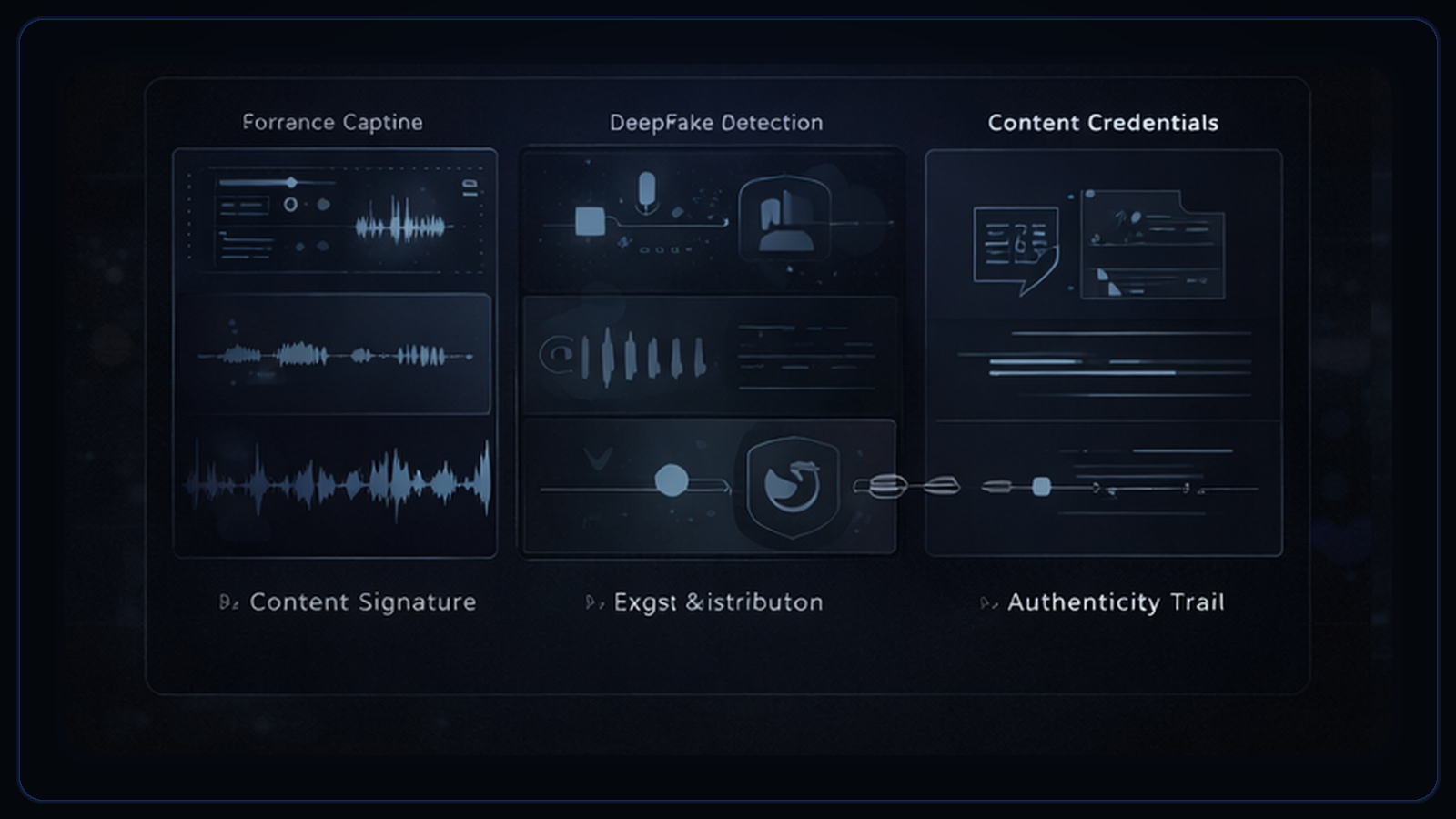
- 01
Content credentials are provenance metadata, not detectors.
- 02
C2PA is the open standard that defines how those provenance records can be represented and verified.
- 03
Missing credentials do not prove a file is fake.
- 04
Credentials help most when they are treated as one layer in a broader review.
Content credentials are showing up more often in discussions about synthetic media, but many people still misunderstand what problem they solve. They are not detectors. They are provenance records.
What content credentials are
In plain English, content credentials are provenance records that travel with a file and help explain origin or edit history.
In plain English, content credentials are metadata attached to a piece of media that can help viewers understand something about its origin, edit history, authorship, or associated assertions. They are designed to be tamper-evident rather than casually editable.
What C2PA is and what credentials may contain
The standard defines the format and verification model; the visible details depend on the tool, workflow, and platform.
C2PA stands for the Coalition for Content Provenance and Authenticity. It is the open specification that defines how provenance assertions and signatures can be represented and verified across media. In the standard’s terminology, a content credential is the non-technical name many users encounter for the manifest-based provenance record.
What you see depends on the tool, workflow, and platform, but credentials may include author or organization details, creation or editing assertions, information about ingredients or source assets, and signatures that help a verifier detect tampering.
They can describe context. They do not automatically answer every question a reviewer might ask.
Why credentials help and why absence is not proof
Credentials can strengthen provenance review, but “no credentials found” only means the provenance signal is missing or unavailable.
Provenance becomes stronger when it is carried in a structured, verifiable way instead of living only in captions, screenshots, or informal descriptions. Credentials can make it easier to understand whether a file comes from a known workflow and whether certain claimed edits or origins are supported.
This is the most important misunderstanding to avoid. Many perfectly legitimate videos have no content credentials at all. They may have been captured on devices or passed through workflows that never created them, or they may have been processed in ways that did not preserve them.
Why credentials can disappear in real workflows
A provenance-friendly file can still lose its credentials after exports, reposts, transcoding, or downstream platform ingestion.
Exports, reposts, transcoding, platform ingestion, and certain distribution workflows can break or strip metadata. Even vendors that support content credentials often warn that downstream publishing destinations may not preserve them consistently.
How credentials fit into a broader authenticity review
The right workflow uses credentials as one evidence layer alongside source checks, corroboration, and analysis of the media itself.
The right way to use credentials is as one layer of evidence. If they are present and valid, that can strengthen provenance review. If they are absent, you still need the rest of the workflow: source checks, contextual corroboration, and analysis of the media itself.
That is also why DetectVideo treats provenance as complementary to, not a replacement for, multi-signal analysis.
- “Credentials prove authenticity”: They strengthen provenance claims when valid, but they do not answer every forensic question about the visible media.
- “No credentials means fake”: False. Many ordinary workflows still produce files with no credentials at all.
- “Credentials and detectors do the same job”: They do not. Credentials describe origin information; detectors analyze the media itself.
Sources and standards
Add provenance to the wider review picture
DetectVideo does not treat provenance as a side note. It places provenance, metadata, and computed media signals in the same review flow so users can see what origin evidence exists and what still requires judgment.
Related articles
These terms are often used interchangeably, but they answer different questions. One inspects the media itself, one may focus on impersonation, and one carries provenance context.
A defensible workflow preserves the file, separates review stages, records missing evidence, and defines when to escalate instead of guessing.
A useful review looks for clusters of evidence, not one weird frame. The best signals show up across visuals, motion, sync, metadata, and provenance.
About this article
Written by DetectVideo Editorial Team.
Technical review by DetectVideo Methodology Review.
Last updated March 29, 2026. Related articles are included for readers who want adjacent context, terminology, and workflow guidance.